Rottweiler Grooming: Gentle Coat Care and Nail Handling
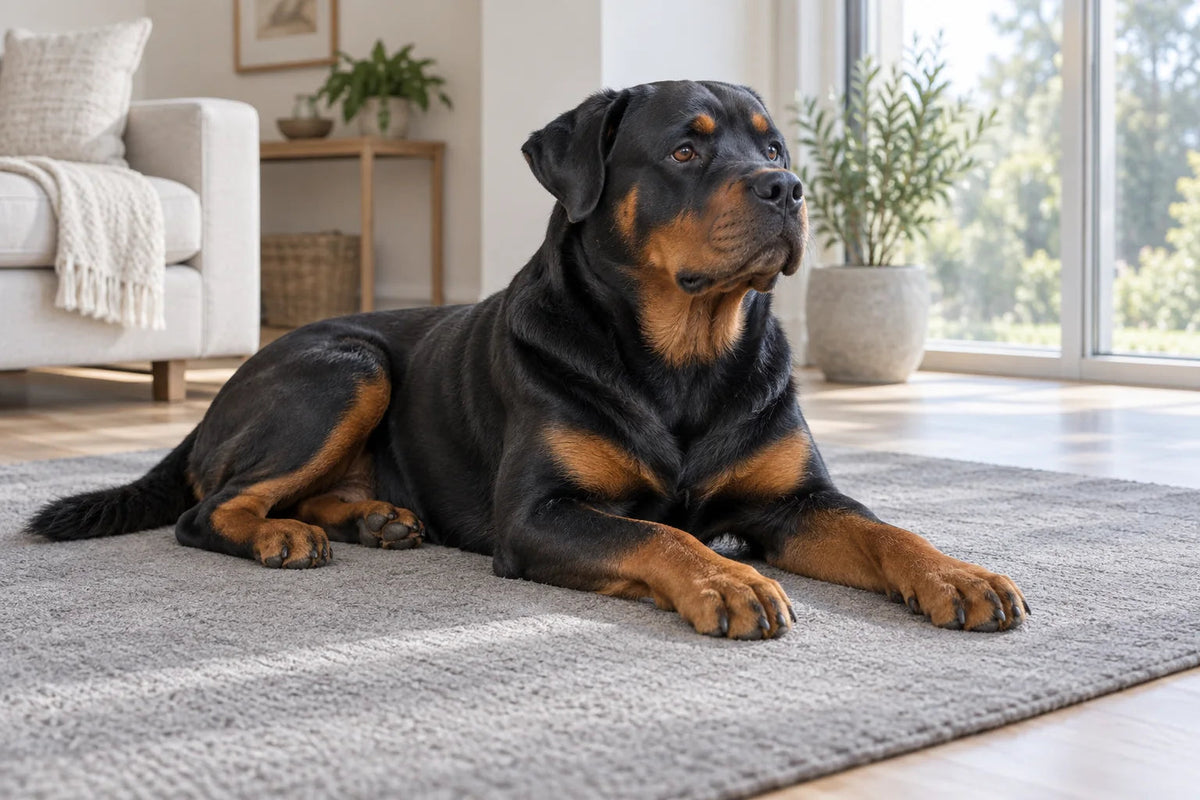
A Rottweiler's close coat can make grooming look like a quick wipe-and-go job. Much of the routine is simple, but loose undercoat, a damp neck and substantial nails still deserve attention. The best approach is controlled, calm and regular.
You do not need to sculpt the body or remove the coat. Preserve the natural outline and put the effort into gentle brushing, complete rinsing and comfortable foot handling.
Powerful dog, light touch. The dog's size does not justify harder brushing or stronger restraint. Good positioning and short sessions make routine grooming easier.
A close coat with different densities
The AKC Rottweiler profile describes a straight, coarse outer coat lying close to the body, with undercoat around the neck and thighs. Shedding can become more pronounced seasonally.
Feel those thicker areas before choosing a tool. Compare them with the short hair on the face and legs. You should not use identical pressure everywhere simply because the dog looks uniformly short-haired.
The natural coat may include slightly rougher hair at the rear of the thighs. That is not automatically untidiness to cut away. A well-groomed pet can retain its ordinary outline without a clipped finish.
Teach the grooming position first
Use a wide non-slip floor area with enough room for the dog to turn or lie down. Avoid a precarious tabletop setup or slippery bath entry. If the dog cannot safely enter your bath, a professional facility may be a better option.
Begin with touch on the shoulder, then a few brush strokes, then a pause. Reward calm cooperation. Introduce tools before a large task is overdue, so the first experience is not a long de-shedding session or a difficult nail trim.
Do not pin the dog down to finish. Pulling away, stiffening or repeated avoidance are reasons to stop and review the approach. An experienced groomer or qualified trainer can help develop comfortable handling.
Use a consistent route through the coat
- Inspect the coat for grit or areas that seem sore.
- Start with an appropriate soft brush or grooming mitt.
- Work along the shoulders and sides with gentle strokes following growth.
- Give the neck and thighs separate, careful attention.
- Lighten pressure on the belly and lower legs.
- Clear hair from the tool and stop before the skin is irritated.
A weekly session is a useful starting point, with extra brief sessions when loose hair increases. Do not brush the same patch repeatedly just because more hair can still be collected.
If ordinary brushing is not moving a packed area, ask a groomer to assess it. Do not reach for a sharper tool and apply more force. The AKC's double-coat guidance distinguishes managing released undercoat from shaving the coat away.
Plan the bath around a large, wet dog
Lay out towels and shampoo, secure a non-slip surface and decide how the dog will enter and leave before turning on the water. If lifting is necessary and you cannot do it safely, change the setup rather than improvising halfway through.
Brush away loose dirt first. Use a dog shampoo as directed and comfortable water, keeping spray away from the face and ears. Rinse the chest, underside and thighs thoroughly; these areas can be missed when attention stays on the broad back.
Press out water with towels. If using a dog dryer, introduce the sound gradually, keep the setting comfortable and direct moving airflow away from the head. Supervise throughout.
Part the hair at the neck and thighs before deciding the dog is dry. Dry the collar separately. A damp strap over damp dense hair is not a good finish to a bath.
Adapt bathing to dirt and the individual dog, as described in Blue Cross's bathing guide. Local cleaning may be enough after a muddy walk.
Take thick, dark nails slowly
Check all nails regularly, including dewclaws. Nail thickness and colour can make the safe trimming margin difficult to judge; ask a professional to demonstrate on your dog rather than copying a cut from a photograph.
The VUNRO large nail clipper can suit larger nails when the cutting technique is established. The VUNRO nail grinder offers gradual smoothing for dogs that accept vibration.
Support the foot naturally without twisting the leg. Remove only a little at a time, keep clear of the sensitive quick and use pauses with a grinder to avoid heat. A single comfortable foot session is more useful than forcing all four feet.
Finish with a practical inspection
Check that the coat and collar are dry, loose dirt is gone and no area has become irritated from brushing. Look at accessible outer ear surfaces without inserting tools into the canal.
Persistent soreness, discharge or an unusual sudden coat change needs professional assessment. Ordinary grooming should leave the dog relaxed and naturally coated, with routine jobs maintained rather than postponed until they become difficult.
Keep learning
More from the Blade Blog
Whippet Grooming: Gentle Coat Care and Comfortable Nails
Read the guide →
Chihuahua Grooming: Smooth Coats, Long Coats and Tiny Paws
Read the guide →