Dry the Coat and Get Ready for a Haircut
Lesson 5 of 12 · Grooming for pet parents
For a planned haircut, a coat that feels dry on top is not ready if it is still damp underneath. This lesson takes you from towel drying to a fully dry, gently combable coat, with breaks whenever the dog needs them.
Remove water before adding airflow
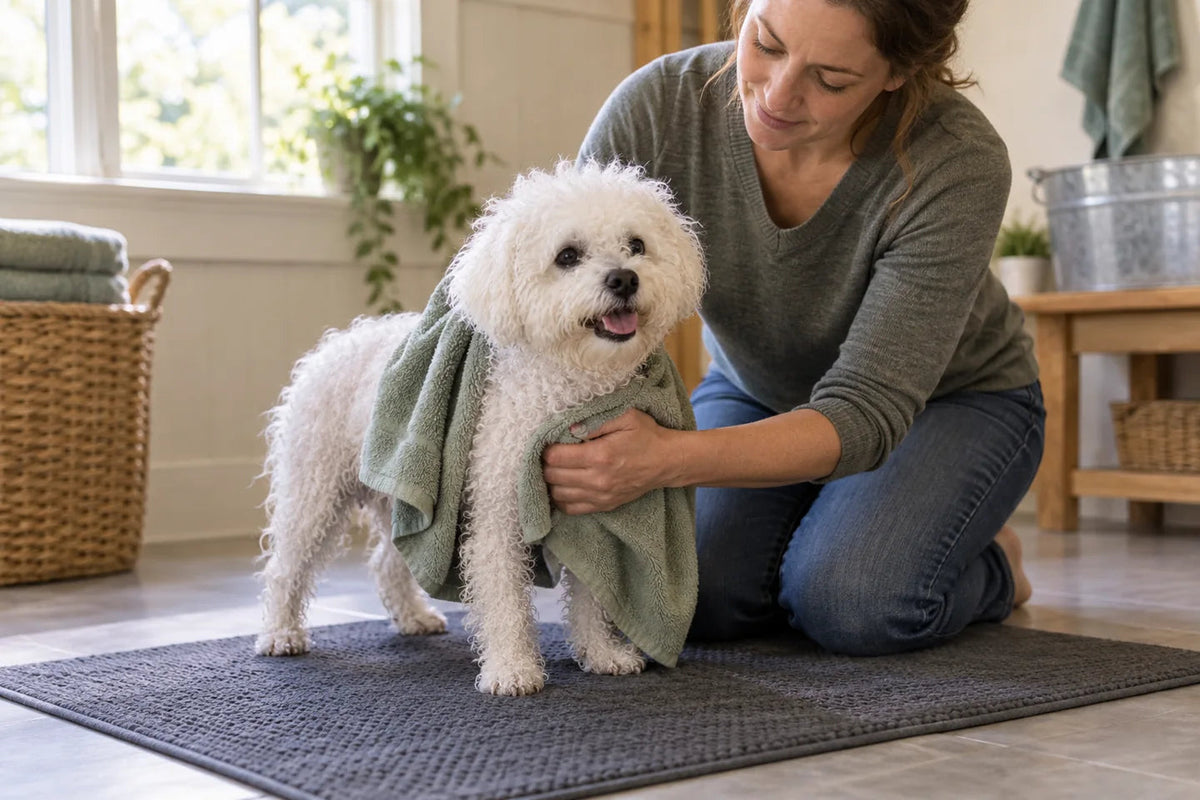
Press and blot with a clean towel rather than rubbing in circles. Use another dry towel when necessary. Work around the body in sections so you do not keep drying the easy patch while water remains elsewhere. Keep the face clear and allow the dog to stand or rest naturally on a nonslip surface.
Towel drying reduces the next job, but it does not necessarily finish it. Curly and dense growing coats can retain moisture close to the skin. Long coat under the ears, around the legs and in other accessible sheltered areas deserves a separate check.
Make the dryer introduction its own task
Use suitable pet-drying equipment according to its instructions. Introduce sound and airflow gradually, at a distance and setting your dog accepts, before expecting them to tolerate a drying session. Keep the equipment and electrical connections safely away from water.
Direct airflow away from the face and keep it moving. Recheck comfort and temperature throughout rather than trusting a setting name. Never use an enclosed heated arrangement or leave a dog unattended to dry. If the dog becomes distressed, stop and reassess; a louder or hotter setting is not a shortcut through resistance.
A groomer can demonstrate how to position a dryer and brush together for your dog's coat. Do not try to coordinate two unfamiliar tools on a moving dog while learning both at once. You can practise positioning and the noise separately before a future bath.
Dry and check in sections
- Choose a manageable body section while the dog is comfortable.
- Use appropriate moving airflow and gentle coat separation as demonstrated for that coat.
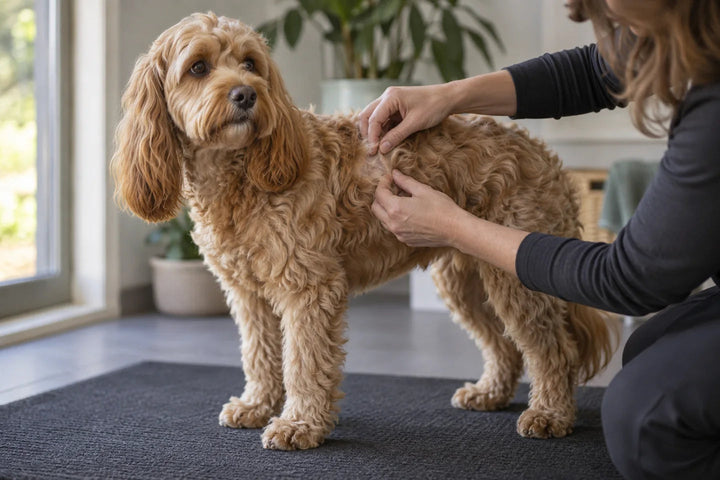
- Pause to part the coat and inspect near the roots, not just the outer tips.
- Once the section is dry, gently check it with a suitable comb.
- If the comb catches, stop and investigate rather than trying to blow or pull the knot away.
A VUNRO coarse-and-fine comb can help check suitable growing coats. Begin with the spacing that passes comfortably. Fine teeth do not turn a tangled section into a ready one by force.
Do not mistake a fluffy appearance for a completed check. Equally, do not keep brushing an already finished section until the skin becomes irritated. Remember which areas you have completed and return only where there is a reason.
Use readiness checks instead of a percentage
“Eighty per cent dry” can describe an intermediate stage; it is not the finish line before clipping. Every intended cutting area must be fully dry to the roots and appropriately combable. If your dog needs a break first, let the haircut wait. Recheck the coat before starting later, because resting, movement and moisture can change how it lies.
If you cannot dry the coat comfortably or safely with your setup, arrange professional help. Shortening a damp, knotted coat to save drying time is not the next step in this course.
Your practice checkpoint
Choose three accessible sections and compare their outer appearance with their roots. Note which dried last and whether the comb moved comfortably through each. Your haircut preparation is complete only when coat condition, the dog's comfort and the intended tool setup are all ready.
Read why a blade can catch or stop cutting if cutting resistance appears later. Do not immediately blame the tool or keep making passes; stop and check preparation, fit and condition in order.
Evidence and further reading
Keep learning
More from the Blade Blog

Start Grooming at Home: Your Dog Comes First
Read the guide →
Meet Your VUNRO Tools: Choose the Right Grooming Setup
Read the guide →