

Ear Care After Baths and Swimming: What to Check
Keep routine ear care gentle, recognise the signs of a problem and avoid treating every damp ear with an unneeded cleaner.
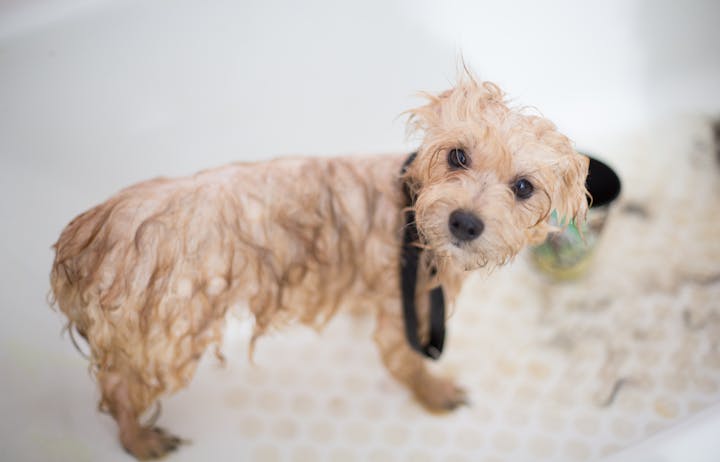
The practical answer
Dry the visible outer ear gently after it gets wet. Persistent head shaking, pain, redness, odour or discharge needs veterinary advice; routine grooming cannot rule out an ear infection.
Start with the dog’s ear history
Tell the groomer about previous infections, prescribed drops or any recent head shaking. If the ears are already sore, discuss the appointment with the vet before washing or cleaning them. A familiar cleaning routine may not be appropriate during a new problem.
Keep water and equipment away from the canal
- Avoid directing bath water into the ears.
- Gently dry the outer ear and surrounding hair using a clean towel.
- Do not insert cotton buds or tools down the canal.
- Do not blow a dryer directly into an ear.
- Use a cleaner only when it is appropriate for the dog and you have been shown the correct method.
Notice symptoms rather than guessing the cause
PDSA lists head shaking, scratching, redness, soreness, unusual discharge and changes in smell among signs of ear problems. It recommends veterinary assessment before choosing over-the-counter treatment. PDSA: ear problems in pets.
| What you notice | Next action |
|---|---|
| A wet outer ear with no discomfort | Dry gently and observe the dog normally. |
| Repeated scratching or head shaking | Arrange veterinary advice rather than repeated cleaning. |
| Pain, swelling or discharge | Stop ear handling and contact the vet promptly. |
| Loss of balance or other marked changes | Seek urgent veterinary advice. |
| Problems recurring after swims | Ask the vet for an individual prevention and care plan. |
Avoid a one-size-fits-all ear routine
Do not assume every dog needs ear plucking, daily cleaner or drying drops. Those choices depend on the ear and its medical history. Home mixtures, alcohol or peroxide should not be used to experiment with a sore ear. If medication has been prescribed, follow the veterinary instructions rather than adding another product.
Record a useful pattern
For repeated problems, note when bathing or swimming happened, when the symptoms began and whether one or both ears were affected. Include the names of products used and any treatment already in progress. That timeline can help the vet assess the situation without you trying to diagnose yeast, bacteria or allergy from appearance alone.
At the grooming handover
- Any ear sensitivity before work started.
- What routine care was actually performed.
- Any new signs noticed during the visit.
- Whether the vet should assess the ears before another cleaning or bath.
Read next
Sources and further reading
Guidance checked September 2026. The practical checklists and examples are VUNRO editorial guidance; the sources below support the underlying care or equipment principles.
Keep learning
More from the Blade Blog
Measure Shampoo Dilution Without Ambiguous Ratios
Read the guide →
The Dilution-Bottle Problem: What Grooming-Product Cultures Found
Read the guide →


